A motorcycle muffler is a carefully engineered component designed to reduce noise, manage exhaust flow, and influence overall engine performance. While it may appear as a simple cylindrical tube, its internal structure is far more complex. Making a motorcycle muffler requires an understanding of acoustics, metalworking, heat control, and backpressure dynamics. For manufacturers and modification enthusiasts, the process also involves selecting the right materials and ensuring consistent build quality.
RUIYUE specializes in producing precision Motorcycle Exhaust systems, and our motorcycle exhaust product line provides reliable options for riders who prefer professionally engineered solutions rather than homemade components.
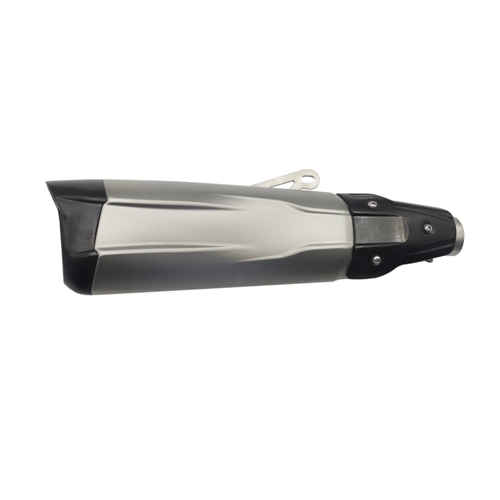
Before constructing a muffler, it is essential to understand what it is designed to achieve. The component must reduce engine sound without disrupting exhaust flow. It also influences horsepower, torque delivery, and throttle response. A good muffler balances noise reduction with performance stability, ensuring that the motorcycle remains smooth and responsive.
Many riders attempt to create a custom muffler to achieve a specific sound profile or performance preference. However, the final outcome depends greatly on the precision of internal chambers, perforated tubes, packing density, and welding accuracy. This is why industrially produced mufflers often perform more consistently than hand-built ones.
Constructing a motorcycle muffler involves selecting heat-resistant, corrosion-resistant materials. Stainless steel, mild steel, and titanium are most commonly used. Stainless steel offers a balance between cost and durability, while titanium provides premium performance at a higher price point. Proper material selection affects sound quality, lifespan, and ease of fabrication.
A basic list of commonly used components includes:
outer shell tubing
perforated inner tube
baffle plates or sound chambers
heat-resistant packing material
end caps and mounting brackets
welding wire suitable for high-temperature environments
These materials are similar to those used in mass-produced exhaust systems such as the motorcycle exhaust models developed by RUIYUE.
The interior of a muffler determines how effectively it can reduce noise while maintaining exhaust flow. Designs vary widely, but the three most common types include:
Straight-through mufflers
Exhaust flows through a perforated tube wrapped in packing material. This design offers a deep sound and minimal backpressure.
Chambered mufflers
Internal chambers reflect sound waves to cancel noise. These designs produce a tight, controlled exhaust note.
Baffled mufflers
Baffle plates slow and disperse exhaust gases to control volume. These work well for low-noise applications.
A homemade muffler usually replicates one of these structures, though industrial versions precision-engineer chamber dimensions using controlled manufacturing processes.
While each builder may adopt a different approach, most fabrication methods follow a similar sequence. Below is a conceptual workflow that demonstrates how a muffler is typically constructed.
The first step is determining the length, diameter, and intended internal structure. Longer mufflers reduce noise more effectively, while shorter ones produce a sharper exhaust tone. Builders typically sketch the outer shell and internal components to define weld points and assembly order.
Metal tubing is cut to size, edges are deburred, and the tube is checked for roundness. Surface preparation is crucial because welding imperfections can cause air leaks or vibrations later. Industrial manufacturers often use automated cutting tools for consistent precision.
A perforated inner tube channels exhaust gases through the muffler. The perforation pattern influences sound absorption. This tube is usually wrapped with fiberglass packing material or basalt fiber to absorb sound waves. In performance designs, stainless steel wool is added for heat resistance.
If the muffler uses baffles, plates are cut from sheet metal and welded into position. Chambered designs require angled partitions to create sound-wave reflections. These internal components must fit tightly to avoid rattling.
After placing the inner tube and internal structures into the main shell, both ends are welded shut. Precision welding is essential to prevent leaks. Manufacturers like RUIYUE use controlled welding equipment to ensure uniform strength throughout the exhaust tube.
Custom mufflers require brackets tailored to a specific motorcycle frame. These brackets are welded onto the shell at the correct angle and position. Misalignment can lead to vibration or premature cracking.
Surface finishing improves both appearance and durability. Grinding the weld seams smooth prepares the muffler for polishing, heat-resistant paint, or ceramic coating. Polishing also enhances corrosion resistance.
The final result depends heavily on craftsmanship. This is why riders seeking reliability often choose professionally engineered systems like those in RUIYUE’s motorcycle exhaust catalog.
A muffler affects airflow, and airflow influences power output. Over-restrictive designs reduce horsepower, while overly open designs increase noise and may violate local regulations. Builders must balance sound preferences with vehicle performance.
Factors to evaluate include:
Backpressure: Incorrect backpressure levels can cause poor throttle response.
Flow turbulence: Smooth transitions inside the muffler improve power delivery.
Pipe diameter: A tube that is too narrow restricts exhaust flow; too wide causes uneven scavenging.
Thermal expansion: Materials must withstand heat without deforming.
RUIYUE designs exhaust systems using controlled simulations and testing equipment to maintain consistency across each production batch.
| Feature | Homemade Muffler | Professionally Manufactured Muffler |
|---|---|---|
| Precision of internal structure | Variable | High, machine-controlled |
| Sound consistency | Depends on builder | Stable across units |
| Durability | Depends on weld quality | Engineered for long service life |
| Noise control | May be unpredictable | Tuned for performance and compliance |
| Cost | Low | Medium to high depending on model |
| Safety | Not guaranteed | Tested for pressure and vibration |
Professionally produced components, such as RUIYUE’s motorcycle exhaust systems, undergo testing to ensure structural stability, vibration resistance, and noise reduction accuracy.
Creating a functional muffler requires more than basic metalworking tools. Builders often face issues such as:
uneven weld seams leading to leaks
rattling internal components
excessive noise due to insufficient packing
overheating from improper material selection
difficulty achieving correct mounting angles
Because motorcycles operate under high vibration, even a small manufacturing flaw can result in premature failure.
Furthermore, local regulations may restrict acceptable noise levels. Homemade mufflers frequently fall outside approved sound ranges, making them unsuitable for road use in many regions.
While building a muffler offers customization opportunities, professionally engineered exhaust systems provide major advantages:
reliable noise reduction
improved fuel efficiency
longer lifespan due to stronger materials
consistent sound tuning
guaranteed fitment
lower risk of structural failure
RUIYUE’s exhaust manufacturing line uses specialized forming, bending, and coating equipment to achieve these qualities. The company’s experience in producing high-volume OEM components ensures stable performance even under extreme operating conditions.
Some riders fabricate mufflers for:
custom motorcycle builds
off-road or racing applications
unique sound preferences
budget-restricted modifications
However, homemade components are best suited for controlled environments rather than daily commuting or high-speed travel. When safety, longevity, and regulatory compliance are priorities, industrial-grade mufflers are a more dependable choice.
Making a motorcycle muffler involves selecting the right materials, designing internal structures, fabricating the perforated core, welding the body, and tuning airflow for optimal performance. While skilled builders can create functional mufflers, the process requires precision and understanding of acoustics, metallurgy, and engineering principles.
For riders seeking a dependable, professionally engineered option, RUIYUE offers a full line of durable and performance-tested motorcycle exhaust systems. These products combine structural strength, noise control, and long-term reliability—qualities that are difficult to replicate in a homemade design.
With proper understanding of the process and access to high-quality components, riders can decide whether to fabricate their own muffler or choose a ready-made solution designed for safety, stability, and performance.


 Mobile Phone:
 Phone:
 Contact Now