Choosing between a Carbon Fiber Motorcycle Tank and a steel motorcycle tank is not only a style decision. The tank material affects weight distribution, long-term durability, crash behavior, surface finish stability, and how the tank holds up under daily vibration, temperature changes, and fuel exposure. For riders, builders, and aftermarket buyers, the best option depends on how the motorcycle is used, what performance goals matter most, and how the tank will be maintained over time.
CRAZY OLD MAN supplies a dedicated line of motorcycle tanks built for practical fitment and real riding demands, supporting customization programs and replacement part sourcing.
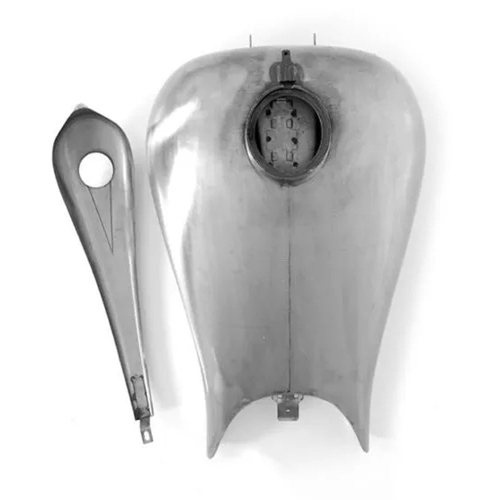
Carbon fiber tanks and steel tanks are fundamentally different in construction. Steel tanks are formed, welded, and finished as a single metal structure. Carbon fiber tanks are built as composite layers, usually with resin systems and reinforcement patterns that determine stiffness and impact behavior. This means the performance gap is often less about the label and more about execution details such as wall thickness, reinforcement zones, mounting design, and finishing system.
When comparing the two, focus on:
Weight and center-of-gravity impact
Resistance to dents, cracks, and fatigue
Fuel exposure and sealing approach
Repairability and long-term service planning
Surface finish durability and cosmetic aging
A carbon fiber tank is often chosen for weight reduction. Less mass near the upper center of the bike can change steering response and reduce the heavy feel during low-speed balance or quick transitions. This benefit is more noticeable on bikes where the tank sits high, or where the build is optimized for agility.
A steel tank is heavier, but weight is not automatically a drawback. Steel can contribute to a stable, planted feel on certain setups, especially when handling priorities favor predictability over quick direction changes. For touring or daily commuting, the practical difference in feel may be smaller than expected compared with the difference in cost and serviceability.
Steel tanks tend to resist cracking and often deform by denting under impact. In many cases, a dent is a cosmetic and clearance issue rather than an immediate structural failure. This damage mode is one reason steel remains common for general-purpose motorcycles and replacement tanks.
Carbon fiber composites can be very stiff, but stiffness does not guarantee toughness in every impact direction. Under certain impacts, composites may crack, delaminate, or suffer internal damage that is not obvious from the outside. A carbon fiber tank can still be durable, but the risk profile is different. The ability to inspect and validate structural integrity becomes more important, especially for high-vibration use or environments where minor impacts are common.
Fuel contact is constant, and tank material performance depends heavily on how the inner surface is protected and sealed. Steel tanks rely on coatings and corrosion control to prevent rust. Carbon fiber tanks rely on resin systems and liners designed to resist fuel permeation and maintain long-term stability.
Key practical points:
A steel tank can rust internally if moisture accumulates or if protective coatings degrade.
A carbon fiber tank must use a fuel-resistant resin or internal liner solution to prevent fuel absorption and vapor permeation concerns.
For both materials, the quality of seams, fittings, and mounting points matters as much as the base material.
When sourcing, it is not enough to choose carbon fiber or steel. Buyers should verify manufacturing controls, sealing approach, and fitment stability for the specific application.
CRAZY OLD MAN motorcycle tanks are positioned for aftermarket and customization needs where consistent fitment and reliable structure are essential for real-world usage.
Steel is strong and proven, but it requires corrosion management. Paint quality, storage conditions, and maintenance routines influence how long a steel tank stays clean and structurally sound. In humid climates, coastal regions, and seasonal storage cycles, corrosion risk becomes a primary consideration.
Carbon fiber does not rust, but composite tanks still face weathering issues such as UV exposure, surface micro-scratches, finish clouding, and resin aging if the exterior protection is not strong. The tank may remain structurally stable while the appearance degrades, especially when exposed to strong sunlight and frequent cleaning.
Steel tanks are generally easier to repair or refurbish in many markets. Dent removal, welding, repainting, and refinishing are more widely available service paths. This can reduce downtime and lower total lifecycle cost, especially for fleets, daily riders, and resale programs.
Carbon fiber repairs can be effective, but they are more specialized and vary widely by local skill availability. Composite repair quality depends on proper inspection, controlled curing, and correct material matching. For buyers who plan for long-term service, repair access should be considered before selecting carbon fiber.
| Category | Carbon Fiber Tank | Steel Tank |
|---|---|---|
| Weight impact | Typically lower, improves agility and upper-mass control | Typically higher, can feel stable and planted |
| Common damage mode | Potential cracking or delamination depending on impact | Often dents or deformation without cracking |
| Corrosion behavior | No rust, but depends on resin and finish protection | Needs corrosion control, coatings, and storage care |
| Fuel compatibility dependence | Strong dependence on liner or fuel-resistant resin system | Strong dependence on internal coating and rust prevention |
| Repair accessibility | More specialized, depends on composite repair capability | Widely repairable in many markets |
| Cost profile | Often higher due to composite manufacturing | Often more cost-effective for replacement programs |
| Best fit for | Performance builds, weight-sensitive projects | Daily riding, replacement sourcing, long-term service planning |
If the project prioritizes weight reduction and premium appearance, carbon fiber can be attractive. The decision should still be tied to fuel-system design, mounting stress distribution, and long-term finish expectations. A carbon fiber tank is most effective when the whole build is aligned with performance goals rather than used as a single isolated upgrade.
Steel is often the most practical choice for durability, cost control, and repair access. The key is choosing a well-built steel tank with consistent fitment and a reliable finishing system to manage corrosion risk.
Consistency and fitment predictability matter more than theoretical material advantages. A dependable supplier that supports stable manufacturing output helps reduce returns, installation issues, and customer complaints.
CRAZY OLD MAN provides motorcycle tanks designed to support these practical purchasing realities, including replacement needs and customization workflows.
Confirm fitment scope and mounting geometry
A tank that fits poorly creates stress at mounts and can accelerate fatigue issues, regardless of material.
Evaluate the finishing system and long-term appearance goals
Steel needs corrosion-ready paint systems. Carbon fiber needs UV and surface protection strategies.
Review fuel exposure protection approach
Internal coating quality for steel and resin or liner strategy for composites should be treated as core requirements, not optional details.
Match the tank material to how the bike is actually used
Track-focused builds, show bikes, commuters, and touring motorcycles have different risk profiles and service expectations.
Carbon fiber and steel motorcycle tanks deliver different advantages because they fail differently, age differently, and demand different maintenance planning. Carbon fiber can reduce weight and support performance-focused builds, but it depends heavily on resin or liner design and specialized repair options. Steel remains a practical standard for daily riding and replacement sourcing because it is robust, repairable, and cost-effective when protected against corrosion. For buyers who need consistent supply and dependable fitment for real-world applications, CRAZY OLD MAN motorcycle tanks offer a solid foundation for aftermarket programs and customization projects.


 Mobile Phone:
 Phone:
 Contact Now