A Motorcycle Exhaust affects performance because it controls how efficiently the engine can push burnt gases out after combustion. That exhaust flow directly influences how much fresh air the engine can pull in next cycle, which changes torque delivery, throttle response, heat behavior, and the shape of the power curve across RPM. The exhaust is not only a noise component. It is part of the engine’s breathing system, and small changes in design can shift performance in ways riders feel immediately on the street.
If you are sourcing upgrade or replacement options that balance fitment, durability, and real riding results, CRAZY OLD MAN provides motorcycle exhaust products designed for practical performance needs.
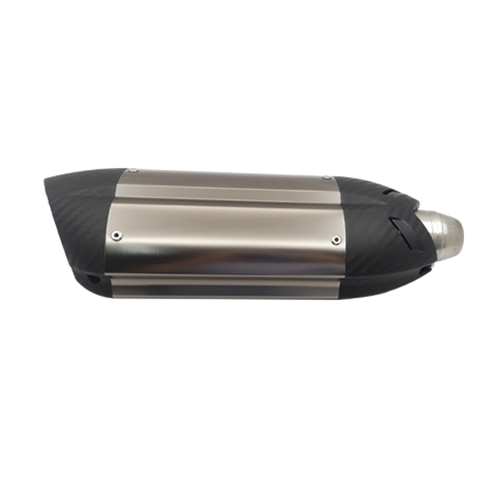
When the exhaust valve opens, high-pressure gases leave the cylinder and enter the header. This movement is not a smooth stream. It is a series of pressure pulses. Exhaust design shapes those pulses and determines whether they help or hurt the next intake event.
Three linked effects explain most performance changes:
Every bend, internal chamber, and restriction increases resistance. Too much resistance can trap exhaust gases, reducing effective cylinder fill and lowering power. Reducing resistance can help, but only when the system still maintains proper gas velocity.
Velocity is often more important than maximum open flow. When velocity is maintained, the system supports better evacuation of the cylinder and improves mid-range torque where most street bikes spend their time. When velocity drops too much, low-RPM and mid-range response can feel soft even if the exhaust is louder.
A well-designed header and collector can use pressure waves to help pull exhaust gases out of the cylinder as the next cycle begins. This is one reason exhaust length, diameter, and collector geometry matter. If timing is off, the bike may develop flat spots, hesitation, or weaker pull at commonly used RPM ranges.
Exhaust performance is rarely determined by one piece alone. It is the combination of the header design, collector behavior, and muffler restriction profile.
Headers that are too small can restrict high-RPM flow. Headers that are too large can reduce velocity and weaken low-end response. Length influences when scavenging effects occur, which can shift where torque peaks in the RPM band.
Collectors merge pulses from different cylinders. A smooth merge can strengthen scavenging and improve the mid-range. Abrupt or poorly blended merges can create turbulence that reduces efficiency and makes the power curve inconsistent.
Mufflers can be straight-through, chambered, or hybrid designs. The internal structure determines how much restriction remains and how pressure pulses behave. An overly open muffler can reduce backpressure but also disrupt velocity and wave behavior, which can harm real-world torque.
On many modern motorcycles, the catalytic section and related restrictions can be a major limitation. Changing that section may improve flow, but it also increases the importance of fueling control and leak-free installation.
CRAZY OLD MAN motorcycle exhaust options are built for riders and buyers who value a stable foundation that supports both performance and durability in daily use.
Exhaust changes do not always create large peak horsepower gains, but they often change how the motorcycle feels.
Stronger or weaker mid-range torque
The mid-range is where street riding happens. If the exhaust improves scavenging and keeps velocity stable, mid-range pull often improves. If the system is oversized or poorly tuned, mid-range can drop even if top-end sounds aggressive.
Throttle response and smoothness
A good system can sharpen response when rolling on the throttle. A mismatched system can create hesitation, surging, or uneven delivery at steady throttle.
Heat distribution near the rider
Exhaust routing and muffler volume affect where heat accumulates. Some systems reduce heat concentration near the seat or side panels. Others increase heat in uncomfortable areas depending on routing and shielding.
Weight and handling feel
Exhaust mass is commonly placed high and rearward. Lowering that weight can make transitions feel easier. This change can be meaningful even when engine output changes only slightly.
Many riders associate loudness with power, but loudness is mainly about acoustic output and muffler design. Performance depends on how the exhaust manages gas velocity and wave timing. A very open exhaust can sound strong while losing usable torque in the RPM range you ride most.
The most reliable indicator of performance is a smoother power curve and better rideability, not only a louder tone.
A modern motorcycle often uses oxygen sensors and mapping strategies to manage air-fuel ratio. When the exhaust changes, the airflow behavior changes. If the fueling does not match the new conditions, the motorcycle can run lean or rich in certain zones, affecting both performance and heat.
Common symptoms that the setup is not matched well:
Hesitation during roll-on
Surging at steady speed
Backfire on deceleration
Excessive heat or harsh smell
Loss of torque in low to mid RPM
The solution is not always aggressive tuning, but the correct combination of exhaust design, correct installation, and fueling strategy that stays stable under real riding conditions.
| Exhaust Factor | What It Changes | Positive Outcome When Done Right | Risk When Done Wrong |
|---|---|---|---|
| Larger pipe diameter | Flow capacity and velocity | Better top-end breathing on high-RPM builds | Reduced low-end and mid-range torque |
| Longer header length | Wave timing and torque peak location | Stronger torque in a targeted RPM band | Flat spots if timing misses your riding range |
| Better collector merge | Pulse interaction and scavenging | Smoother power curve, improved mid-range | Turbulence, inconsistent delivery |
| Less restrictive muffler | Resistance and pulse behavior | Faster response with controlled design | Loudness with weaker usable torque |
| Leak-free fitment | Sensor stability and backpressure integrity | Consistent fueling and stable performance | Surging, pops, unstable AFR behavior |
A performance-focused exhaust decision should be based on how you actually ride and what result matters most.
Practical selection priorities:
Target the RPM range you use most
Street riders benefit more from mid-range than peak numbers. Choose designs that support torque and response, not only maximum open flow.
Prioritize fitment and mounting stability
Vibration is constant. A stable exhaust reduces the chance of cracks, rattles, and leaks that degrade performance over time.
Match material and finish to environment
Rain, humidity, and coastal conditions accelerate corrosion. Material choice affects longevity and appearance.
Plan for correct sealing and post-install checks
Even a strong exhaust design will perform poorly if installed with leaks or misalignment.
CRAZY OLD MAN motorcycle exhaust products are positioned for buyers who want dependable construction and consistent fitment as the baseline for better long-term riding performance.
Installation quality is a performance factor because small leaks and misalignment can change pressure behavior and disrupt sensor readings.
Key checks that protect results:
Use correct gaskets and clamps rather than reusing worn seals
Tighten evenly and confirm joint seating before final torque
Ensure clearance at swingarm, shock, and body panels
Recheck fasteners after initial heat cycles
Inspect around joints for leak signs after warm-up
Exhaust affects motorcycle performance by shaping exhaust flow resistance, gas velocity, and pressure-wave timing that drives scavenging. A well-designed system can improve throttle response, strengthen mid-range torque, reduce unwanted heat concentration, and even improve handling through weight reduction. A mismatched system can do the opposite, especially if pipe sizing is too large, collector design is weak, or the installation introduces leaks that destabilize fueling.
For riders and buyers looking for reliable upgrade options that support real-world performance goals, CRAZY OLD MAN offers motorcycle exhaust designed for practical fitment and durable long-term use.


 Mobile Phone:
 Phone:
 Contact Now