A Motorcycle Exhaust can add horsepower, but the gain is rarely a single fixed number. The actual increase depends on the bike’s engine size and design, how restrictive the stock system is, whether you change only the muffler or the full system, and whether fueling is corrected afterward. In many cases, an exhaust upgrade delivers its biggest benefit as a package: improved flow plus correct air-fuel tuning and, when applicable, a header design that supports better scavenging across the RPM range.
This article explains realistic horsepower expectations, what influences dyno results, and how to choose an exhaust that improves performance without sacrificing rideability, durability, or compliance.
If you need to learn more about exhaust configurations and product options, please browse our motorcycle exhaust page.
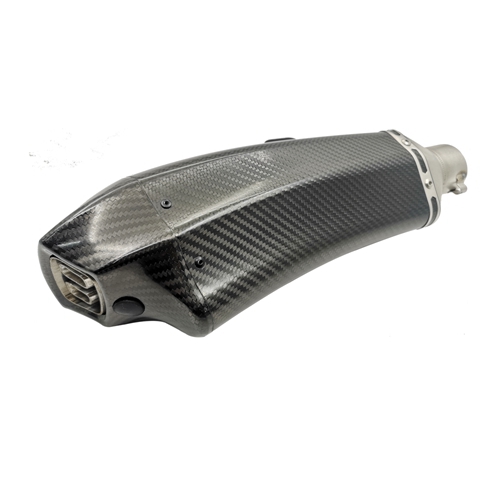
Most riders notice exhaust changes first in sound and throttle feel, then in measured power. On a dyno, the horsepower added by an exhaust usually falls into predictable ranges when all other variables are held constant.
A practical expectation by upgrade type:
Slip-on muffler only
Often delivers a small peak horsepower change on many modern bikes. It may improve midrange smoothness and reduce weight, but large peak gains are uncommon without tuning.
Full system with headers
More likely to produce measurable horsepower gains because headers influence exhaust pulse timing, backpressure behavior, and cylinder scavenging. Gains increase further when fueling and ignition are optimized for the new flow.
Full system plus ECU tuning
This is where consistent gains appear. Tuning corrects lean spots, restores proper fueling, and can unlock the performance potential of the exhaust design.
A realistic range table helps set expectations:
| Upgrade level | Typical peak horsepower change | Where gains are most noticeable |
|---|---|---|
| Slip-on, no tuning | 0 to 2 hp | Sound, weight reduction, minor response changes |
| Slip-on with tuning | 1 to 4 hp | Midrange torque consistency, smoother throttle |
| Full system, no tuning | 1 to 5 hp | Mid-to-high RPM on some setups, may create lean areas |
| Full system with tuning | 3 to 10 hp | Broader gains, improved torque curve and rideability |
| High-performance build support | 6 to 15 hp or more | Large engines, aggressive cams, intake work, proper mapping |
These figures vary by motorcycle platform. A small-displacement commuter bike will not respond the same way as a high-compression sport bike or a large-displacement V-twin.
Horsepower gains come from improving how efficiently the engine moves air in and out. An exhaust influences that process, but the result depends on several linked variables.
1、How restrictive the stock exhaust is
Many modern bikes use catalytic converters, complex chambers, and narrow sections to meet emissions and noise targets. If the stock system is already relatively free-flowing, the exhaust upgrade has less room to add peak horsepower.
2、Engine design and RPM focus
High-revving engines can benefit more from improved high-RPM scavenging, while torque-focused engines may see more change in the midrange. The best exhaust for horsepower is not always the best exhaust for everyday rideability.
3、Header design and collector geometry
Headers are not just pipes. Their diameter, length, bends, and collector shape affect exhaust pulse timing. A well-designed header can increase cylinder evacuation at key RPM points, which supports more effective intake charge filling on the next cycle.
4、Fueling and ignition strategy
When flow increases, the engine often runs leaner unless fueling is corrected. A lean mixture can reduce power and raise temperatures. Proper mapping typically turns an inconsistent result into a stable performance increase.
5、Weight reduction and acceleration feel
Dropping exhaust weight improves how quickly the bike accelerates even if peak horsepower changes only slightly. Riders often confuse this improved response with large horsepower gains, but both benefits are real in different ways.
A slip-on muffler changes the final section of the exhaust, usually reducing weight and altering sound. It can reduce some restriction, but it does not change header pulse behavior. That is why slip-ons often produce limited peak horsepower changes on many modern bikes.
A full system changes the flow path from the engine outlet to the muffler. Because the headers are responsible for pulse energy management, a full system has more potential to improve cylinder scavenging and power delivery. The trade-off is that a full system is more sensitive to tuning and usually requires more careful selection for your riding style.
A useful way to decide is to define your main goal:
If the priority is weight reduction, appearance, and sound refinement, a slip-on can be the practical option.
If the priority is measurable performance across the RPM band, a full system with correct tuning is the more reliable path.
Many riders install an exhaust and expect the dyno number to rise automatically. On modern fuel-injected bikes, the ECU mapping and closed-loop control can limit how much the engine adapts to the new flow. The result can be a mixed outcome: louder sound, slightly quicker response, but minimal horsepower gain or even a power dip in certain RPM areas.
Tuning matters because it aligns the fuel and ignition strategy with the exhaust’s flow characteristics. The most common improvements after tuning include:
Corrected air-fuel ratio across the RPM band
This supports stable combustion and prevents lean power loss.
Smoother torque curve
Many riders care more about the torque curve than peak horsepower. A well-tuned exhaust system often improves the midrange where street riding lives.
Lower operating stress
Proper fueling can reduce excessive heat generated by lean conditions, which helps long-term reliability.
For buyers, the key message is that an exhaust is part of a system. If you want predictable horsepower improvement, plan the exhaust and tuning strategy together.
Horsepower claims can be confusing because dyno results depend on how and where the test is done. Two dynos can show different numbers for the same motorcycle, and even the same dyno can vary based on conditions.
Important variables that change dyno results:
Correction factor and test conditions
Temperature, humidity, and barometric pressure affect air density and power output.
Tire pressure and strap tension
These change rolling resistance and can alter the measured result.
Fan airflow and heat management
Overheating during a run can reduce power and skew comparisons.
Baseline choice
The most meaningful comparison is before-and-after on the same dyno with the same setup. Chasing a number from a different shop is rarely useful.
What matters most for real riding is not only peak horsepower, but whether the torque curve is smoother and stronger in the RPM range you actually use.
Exhaust upgrades involve trade-offs. A system built purely for loudness is not the same as a system built for efficient flow and long-term durability. High humidity, road salt, and heat cycles also affect how the exhaust holds up, especially at welds, joints, and mounting points.
Key considerations when selecting an exhaust for practical performance:
1、Noise level and local regulations
A louder exhaust does not automatically add horsepower. In some cases, noise increases without meaningful performance gain, especially if the internal design is not optimized for flow and scavenging.
2、Heat management and rider comfort
Exhaust routing and materials influence heat near legs and bodywork. A better system balances flow with thermal behavior.
3、Catalyst and emissions requirements
Some applications require retaining catalytic components. Removing emissions equipment can create legal issues and can also affect fuel mapping needs.
4、Durability and corrosion resistance
Material choice and manufacturing consistency matter. Strong weld integrity, stable mounting geometry, and corrosion-resistant finishes help the exhaust stay aligned and quiet over time without cracking or leaking.
A performance exhaust should be evaluated like an engineered component, not just a styling add-on.
To select an exhaust that adds horsepower in a usable way, focus on the entire performance chain rather than one feature.
A practical selection approach:
1、Define your performance goal
Do you want stronger midrange for street riding, or more top-end for track-style RPM use. Different header designs emphasize different ranges.
2、Match the system type to the goal
Slip-on for lighter weight and refined sound, full system for broader potential performance gains.
3、Plan fueling support
If the bike is modern and tightly mapped, assume tuning will be needed to achieve consistent horsepower gains and smooth throttle response.
4、Evaluate construction quality
Look for stable fitment, secure mounting points, consistent welds, and a design that supports long service life under heat cycling.
5、Avoid chasing peak numbers only
A small peak gain with a strong midrange improvement can feel faster and ride better than a larger peak gain with a torque dip.
If you need to learn more about exhaust configurations, material options, and available designs, please browse our motorcycle exhaust page.
An exhaust can add horsepower to a motorcycle, but the gain depends on the bike platform, the type of exhaust upgrade, and whether fueling is corrected afterward. Slip-ons often deliver modest peak changes, while full systems can produce broader improvements, especially with proper tuning that stabilizes the air-fuel ratio and torque curve. The most meaningful outcome is not only the dyno number, but how the motorcycle pulls through the RPM range you ride, how stable it feels under throttle, and whether the system stays durable and compliant in real use.
If you need to learn more about product specifications and selection options, please browse our motorcycle exhaust page.


 Mobile Phone:
 Phone:
 Contact Now