A Motorcycle Exhaust is not just a pipe that sends fumes away. It is a tuned flow system that guides hot combustion gases out of the engine, manages pressure waves created by each firing event, reduces noise, controls heat around the chassis, and in many bikes supports emissions management. When the exhaust is designed and built correctly, it helps the engine breathe efficiently across the RPM range while keeping the bike comfortable and reliable for daily riding.
This guide explains how each section of a motorcycle exhaust works, what happens inside the pipes during a combustion cycle, why header and muffler design change torque delivery, and how modern sensors and catalysts interact with the system. If you need to learn more about product structures and configuration options, please browse our motorcycle exhaust.
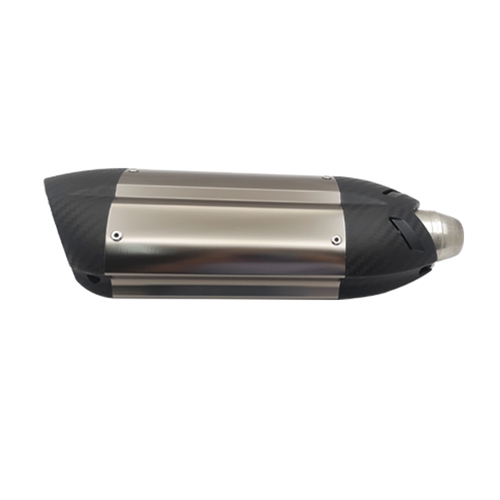
Every time the engine fires, the piston pushes burned gases out through the exhaust valve. Those gases are extremely hot and under pressure. If they are not evacuated efficiently, the next intake charge has less space, which reduces torque and increases heat. The exhaust system is built to solve five practical tasks at the same time.
1、Move exhaust gas away from the engine quickly and safely
This reduces heat soak into the head area and prevents exhaust gas from re-entering the cylinder.
2、Shape pressure waves to help cylinder clearing
Exhaust is not a steady stream. It is a sequence of pulses. The shape of the pipes influences how those pulses assist scavenging.
3、Control sound without blocking flow excessively
Noise reduction is needed for comfort and regulations, but it should not create unnecessary restriction.
4、Manage emissions when required
Catalysts and oxygen sensors rely on stable flow and heat conditions.
5、Maintain durability under vibration and heat cycling
Motorcycles vibrate. Exhausts also see continuous heat expansion and contraction. Good joints, welds, and mounting design are essential.
Understanding exhaust starts with one firing event. In a four-stroke engine, the exhaust valve opens near the end of the power stroke. The cylinder pressure is still high, so gas rushes out into the header. This sudden discharge forms a pressure wave that travels down the pipe at high speed.
That wave is followed by a lower-pressure region. If the header length and collector design are appropriate, the low-pressure region can arrive back at the exhaust valve during valve overlap. Valve overlap is the brief period when exhaust and intake valves can be open around top dead center on many engines. When the low-pressure region is timed well, it helps pull residual exhaust out and encourages fresh intake charge to enter. This is scavenging, and it is the reason header geometry matters more than many riders expect.
The key point is that exhaust flow is wave-driven as well as volume-driven. Two systems with similar pipe diameter can behave very differently if their lengths, bends, and collector transitions change wave timing.
A motorcycle exhaust is usually divided into functional sections. Each section has a different role, and performance changes depend on which section you modify.
| Component | Where it sits | What it does | What happens if it is poorly designed |
|---|---|---|---|
| Header pipes | From cylinder head | Capture pulses, start wave tuning, carry heat | Torque dips, poor scavenging, excess heat near head |
| Collector | Where headers merge | Converts multiple pulses into a controlled flow path | Flat power delivery, turbulence, harsh tone |
| Mid pipe | Between collector and muffler | Stabilizes flow, supports packaging and clearance | Leaks, vibration cracking, fitment stress |
| Catalyst section | Often in mid pipe or collector | Reduces emissions when required | Excess backpressure if undersized, heat stress |
| Muffler | Rear section | Reduces noise, shapes tone, can manage flow | Drone, harsh sound, excessive restriction |
| Baffles or removable insert | Inside muffler | Tunes noise and flow balance | Too loud, weak midrange, annoying resonance |
| Mounts and springs | Along the system | Hold alignment during vibration and heat cycles | Cracks, leaks, misalignment, rattles |
Even small details like slip joints, spring hooks, and bracket stiffness influence long-term reliability. A system that fits perfectly on day one but binds when hot can develop leaks and stress cracks over time.
Many riders hear that engines need backpressure. The more accurate concept is that engines need the right exhaust velocity and the right wave timing. Excess restriction is rarely beneficial. What some people interpret as needed backpressure is often the effect of maintaining sufficient gas speed and preventing poor wave reflections.
If an exhaust becomes too large in diameter for the engine, velocity drops. Low velocity can weaken scavenging and reduce low-RPM torque. If transitions are abrupt, turbulence increases and pressure waves become messy, which can create flat spots. That is why a properly tuned exhaust can improve torque without being restrictive in a crude way. It is not about blocking flow, it is about controlling it.
Header length and collector shape are usually the biggest factors in how the torque curve changes. Mufflers affect sound most, but their internal design can also influence how cleanly the system flows at higher RPM.
Headers and collectors determine how pulses interact. On multi-cylinder bikes, each cylinder fires at a different time. The exhaust system can be designed to let one cylinder pulse help create a low-pressure region for another cylinder at the right moment. This is one reason 4-into-1 systems and 2-into-1 systems can feel different, even on engines with similar displacement.
In simplified terms:
A design that strengthens scavenging in the midrange often feels punchier in street riding
A design that prioritizes high-RPM wave timing can increase top-end pull but may soften low RPM response if not matched well
The collector is where much of this behavior is decided. A smooth merge angle and stable cross-sectional transition help reduce turbulence. Turbulence does not just slow flow, it also disrupts wave behavior, which can make the engine feel inconsistent through certain RPM ranges.
A muffler reduces noise by controlling how sound waves exit the system. It does not have to block gas flow to do that. Good muffler designs use a combination of expansion chambers, perforated cores, and packing materials to absorb high-frequency noise while maintaining a stable path for exhaust gas.
Common muffler structures include:
Straight-through perforated core with packing
Often supports flow well and can deliver a deeper tone, with noise level largely controlled by core size and packing density.
Chambered designs
Can reduce noise strongly, but must be designed carefully to avoid unwanted restriction and harsh resonance.
Packing material quality matters for long-term consistency. Low-quality packing can degrade and blow out, causing the exhaust to become louder over time and sometimes changing tone in an unpleasant way. Well-controlled packing and consistent assembly help maintain stable sound over the service life.
On many modern motorcycles, the exhaust system is part of the engine control strategy. Oxygen sensors read the oxygen content in the exhaust stream to help the ECU adjust fueling, especially in closed-loop operating ranges. If you change flow characteristics significantly, the engine can run leaner or richer than intended, depending on the ECU logic and whether the bike is using closed-loop or open-loop mapping at that RPM and throttle position.
Catalysts need heat to work efficiently. Exhaust design affects catalyst temperature, and catalyst placement affects how much restriction exists in the system. A high-quality exhaust design accounts for these trade-offs, balancing flow, heat management, and compliance needs.
Some bikes also include exhaust valves that change flow path or outlet area at different RPM to manage noise and torque delivery. If a new system changes or deletes that function, tuning and careful system selection become more important for smooth rideability.
motorcycle exhausts live in a harsh environment: vibration, road debris, rain, salt air in coastal regions, and constant heat cycling. That is why material choice, weld consistency, and mounting design are not secondary details. They are part of how the exhaust works as a reliable system.
Practical durability factors include:
Corrosion resistance for the climate where the bike operates
Stable bracket design that supports the system without over-constraining expansion
Joint design that seals well while allowing thermal movement
Consistent fitment so the system does not preload stress into the pipes
An exhaust leak is more than a noise issue. Leaks can change oxygen sensor readings, create popping, increase local heat near bodywork, and weaken performance consistency. Good manufacturing control reduces leak risk by maintaining joint roundness, correct spring tension geometry, and accurate alignment.
CRAZY OLD MAN focuses on motorcycle exhaust manufacturing with attention to fitment consistency, structural stability, and repeatable production quality so the system performs as intended over time.
If you need to learn more about product configurations, materials, and available options, please browse our motorcycle exhaust.
A motorcycle exhaust works by evacuating hot gases, managing pressure waves to support scavenging, controlling noise through muffler design, and supporting emissions and ECU behavior on modern bikes. Performance changes come less from simple restriction and more from how header length, collector transitions, and muffler internals shape pulse timing and flow stability. When the system is designed and built well, it can improve rideability, tone quality, and long-term durability while maintaining reliable fitment under vibration and heat cycling.
If you need to learn more about exhaust product details and selection guidance, please browse our motorcycle exhaust.


 Mobile Phone:
 Phone:
 Contact Now