Choosing the right material for a Motorcycle Exhaust is not only a technical decision, it is a sourcing decision that affects unit cost, durability in real riding conditions, appearance consistency across batches, and how reliably the system fits different motorcycle platforms. For importers, distributors, and project buyers building a catalog or supporting multi-model programs, material selection is one of the first specifications that should be locked, because it influences welding method, surface finishing, packaging protection, and long-term warranty risk.
Most motorcycle exhaust systems are made from a short list of proven metals, with each material suited to different positioning levels and market expectations. The most common options include stainless steel, carbon steel with coating, titanium, and aluminum for specific components. In real product programs, brands may also use mixed-material structures, such as stainless mid-pipes combined with different muffler shells to balance cost and appearance.
Below is a practical, buyer-oriented guide to the materials used in motorcycle exhaust manufacturing, and how RUIYUE supports customization and stable supply for motorcycle exhaust projects.
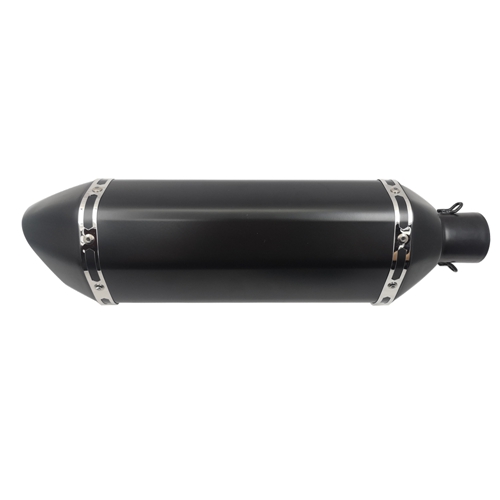
Stainless steel is widely used for motorcycle exhaust because it offers an effective combination of corrosion resistance, heat tolerance, and manufacturing stability. For many markets, it is the safest choice when you need consistent appearance and predictable lifespan without excessive cost pressure.
From a manufacturing point of view, stainless is also suitable for repeatable bending and welding, which matters when you are building a program that must maintain consistent geometry across many batches. In catalog distribution, this reduces fitment complaints caused by dimensional drift.
Stainless steel exhaust products are typically selected when your goals include stable long-term supply, consistent surface finish, and wide compatibility. It also supports multiple finishing directions, which helps you create different product tiers without changing the core structure.
For sourcing programs, the key value of stainless is not only corrosion performance but also its compatibility with scalable production control. RUIYUE commonly supports stainless configurations for multi-model exhaust projects that require high repeatability and consistent outgoing quality.
Carbon steel is another material used in motorcycle exhaust manufacturing, especially when the product is positioned for cost-sensitive markets or replacement programs. On its own, carbon steel does not have the same corrosion resistance as stainless, so it is usually paired with a protective surface treatment such as heat-resistant paint, ceramic coating, or other coating strategies.
This option can be attractive for buyers who need strong price competitiveness for a bulk order, particularly for standard models where aftermarket replacement demand is high. However, coating quality becomes the critical factor. If coating adhesion or heat cycling resistance is weak, the surface may discolor, chip, or corrode earlier than expected, which can impact customer satisfaction.
From a buyer perspective, the carbon steel path should include clear coating requirements, consistent process control, and packaging protection so the coating surface does not get damaged in transit. This is where supplier capability matters, because coating is a process-dependent quality attribute, not only a material attribute.
RUIYUE can support coated steel programs when the goal is value positioning, and we focus on aligning material and finish selection with the real usage environment and your catalog expectations.
Titanium is used in motorcycle exhaust systems when weight reduction and premium positioning are the main priorities. It is valued for its high strength-to-weight ratio and strong heat tolerance, and it helps brands create a top-tier exhaust line where low weight and distinctive appearance are part of the purchase decision.
Titanium sourcing programs require careful process control. Forming and welding parameters must be stable, and quality checks should focus on weld integrity and dimensional accuracy. Titanium also demands higher material cost and tighter production discipline, so it is typically used for flagship models or high-value product lines rather than wide-coverage catalogs.
For buyers, the value is best realized when the product strategy supports a premium tier and the target customers recognize the weight and material advantage. It is also important to define the finishing expectations early because titanium surfaces can show color change patterns under heat cycling, which may be desired in some markets and disliked in others.
RUIYUE supports premium exhaust development pathways, helping project buyers plan the right material tier for the intended positioning and the expected market acceptance.
Aluminum is not typically used for the hottest sections such as headers, but it can appear in some muffler outer shells or accessory components depending on design goals. The main reason is weight and ease of forming. However, because aluminum behaves differently under heat, and exhaust temperature varies by engine design and riding conditions, aluminum usage is usually limited to locations where thermal load is lower and structural demands are well understood.
In many practical programs, manufacturers adopt mixed-material strategies to balance cost, performance, and styling. A common approach is a stainless steel pipe structure combined with different muffler shell materials, chosen for appearance, weight targets, or pricing tier.
From a sourcing standpoint, mixed-material structures require extra attention to joint design, fastener selection, and galvanic corrosion considerations where dissimilar metals meet. These details affect long-term reliability and how stable the appearance remains after repeated heat cycles.
RUIYUE can support mixed-material exhaust structures by aligning design details with production feasibility, helping you achieve differentiation without adding unnecessary quality risks.
To select the right motorcycle exhaust material for your program, it helps to evaluate the decision through sourcing-relevant criteria rather than technical language alone.
Usage Environment And Corrosion Exposure
If the target market includes high humidity, coastal regions, or winter road conditions, corrosion resistance becomes a major factor. Stainless options are commonly preferred when long-term appearance stability is important.
Product Positioning And Price Tier
Carbon steel with coating can be effective for price-focused catalogs, while titanium aligns with premium lines. Mixed-material strategies can help you offer multiple tiers without rebuilding the entire system.
Surface Finish Expectations
Polished, brushed, matte, and coated surfaces each carry different handling and packaging requirements. Material choice should match the finish you want to deliver consistently in wholesale distribution.
Fitment Repeatability And Batch Stability
For multi-model programs, stable geometry matters more than isolated material claims. Material choice impacts how well the system maintains shape through bending and welding processes.
Catalog Strategy And SKU Management
If your goal is broad fitment coverage, selecting a material platform that supports modularity can reduce SKU pressure. This is especially important for solution provider projects where multiple models must be served with controlled variation.
RUIYUE supports material decisions by aligning your program goals with a manufacturable structure and consistent production output, so your procurement plan scales smoothly.
Material selection is only the starting point. Buyers also need a supplier that can translate material choices into stable manufacturing and flexible customization without losing consistency.
RUIYUE develops motorcycle exhaust programs with practical customization paths that match procurement needs. Typical customization directions include muffler dimensions, bracket structures, inlet interfaces, internal baffle layouts, and surface finishing choices. The goal is to support differentiation while keeping production repeatable, which is critical for multi-batch ordering.
For wholesale buyers, supply stability means the product you receive in repeat orders matches the approved sample in geometry, finish, and packaging outcome. RUIYUE emphasizes controlled fixtures, repeatable welding processes, and inspection steps that protect fitment accuracy and appearance consistency.
In OEM/ODM programs, we support deeper customization by aligning the exhaust architecture, mounting system, and finish plan to your product strategy, while maintaining production feasibility at scale.
Motorcycle exhaust systems are most commonly made from stainless steel, carbon steel with protective coatings, and titanium, while aluminum and mixed-material designs may be used in specific components or styling-focused structures. The right material depends on your target market environment, price positioning, finish requirements, and how you plan to scale fitment coverage across motorcycle models.
If you are planning a new exhaust line or upgrading your current catalog, RUIYUE can support material selection, customization planning, and stable long-term supply for motorcycle exhaust programs.
Send us your target motorcycle models, preferred material tier, finish preference, and expected order volume. We will recommend a manufacturable configuration, provide a quotation, and support your sampling process to move your project forward efficiently.


 Mobile Phone:
 Phone:
 Contact Now