On many motorcycles, two exhaust pipes are not a styling gimmick. They are often the result of engine architecture, packaging constraints, heat management goals, and the need to balance sound and flow across cylinders. For professional buyers building a product catalog or developing model-specific exhaust programs, understanding why dual exhaust exists helps you define the right structure, choose the correct interfaces, and plan customization in a way that protects fitment accuracy.
Depending on the motorcycle, two pipes can mean two separate exhaust paths from a twin-cylinder engine, a split system after a collector, or a dual-outlet muffler designed for symmetry. The right explanation always starts with how the engine breathes and how the chassis is packaged.
Below is a sourcing-oriented breakdown of the main reasons motorcycles use two exhaust pipes, and how RUIYUE supports scalable customization for motorcycle exhaust programs.
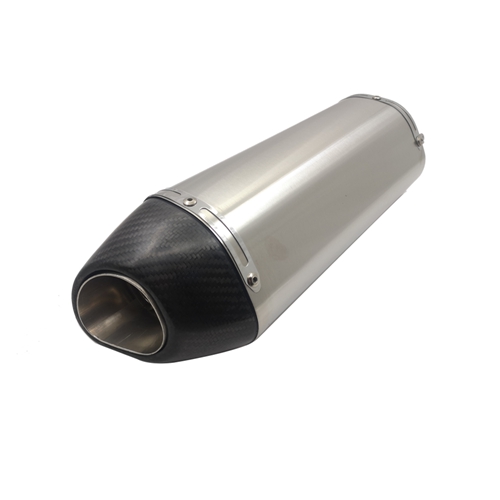
A primary reason motorcycles have two exhaust pipes is the engine layout. Twin-cylinder engines and multi-cylinder engines can be designed so that exhaust gases exit in separate paths for each cylinder bank or cylinder pair. In these cases, two pipes are a direct consequence of how the engine is built.
When cylinders are paired into two exhaust streams, the exhaust system can be tuned around pulse timing and flow distribution. This matters because exhaust pulses are not continuous, they arrive in waves. Splitting flow can reduce interference between pulses and help maintain stable scavenging behavior across the operating range.
From a fitment and sourcing angle, engine configuration determines:
How many header outlets must be matched
Whether the system uses dual headers with separate mufflers
Whether the system merges into a collector and then splits again for dual outlets
For project buyers, clarifying which dual-pipe structure is required prevents expensive rework during sampling and reduces installation complaints later.
Another reason for two exhaust pipes is flow management. When displacement and gas volume increase, a single pipe can become restrictive if diameter is limited by chassis space or styling requirements. Using two flow paths can reduce flow resistance without forcing an oversized single pipe that is difficult to route and mount.
This is not only about peak output. Many motorcycles are designed for smooth torque delivery and stable response. Dual-pipe layouts can be used to tune backpressure and pulse behavior in a way that supports the intended ride character.
For buyers developing an OEM/ODM exhaust line, the key is not simply choosing dual pipes, but choosing the correct structure:
True dual, where gases remain separated
2-into-1-into-2, where a collector merges flow and later splits for symmetry
Dual-outlet muffler, where splitting occurs inside the canister
Each structure has different tooling complexity and different fitment variables, which impacts your SKU plan and repeat production control.
Motorcycle chassis layout often forces design decisions that are not obvious in photos. Fuel tank shape, rear suspension, swingarm travel, center stand position, footpeg brackets, and pannier or luggage clearance all compete for space. Two exhaust pipes can be a practical solution when a single large muffler or single routing path creates conflicts.
Some models use dual exhaust to distribute volume and shape across both sides of the bike, allowing the mufflers to be smaller and easier to place. In other designs, the system must avoid heat concentration near a single location, so splitting components improves overall packaging.
For wholesale programs that target multiple models, packaging is one of the biggest reasons fitment issues happen. A dual exhaust that looks similar across models may still require different bracket geometry, different outlet angles, and different clearances. RUIYUE focuses on these physical constraints during development so the final product installs cleanly and consistently.
Exhaust heat is a major design factor. Concentrating all heat on one side of the motorcycle can increase surface temperatures near the rider’s leg, passenger foot area, or luggage mounts. Two exhaust pipes can help distribute heat load across the chassis, reducing local hot spots.
Heat distribution also matters for durability. If one side of the system experiences excessive heat cycling, coatings can discolor faster, rubber isolation parts can degrade, and nearby components can suffer from heat exposure. Splitting the exhaust mass can lower peak temperature exposure in a single zone, depending on routing and shielding.
For sourcing programs, this is a practical specification issue. When buyers request dual exhaust for comfort or thermal reasons, the supplier must manage:
Shield mounting and fastener stability
Clearance for airflow
Consistent finishing that remains stable after repeated heat cycles
RUIYUE supports dual-pipe development with attention to real-world thermal behavior so the product holds up under long-term use and repeated batch supply.
Many motorcycles use two exhaust pipes for visual balance. Symmetry can be a deliberate design choice, especially for models positioned as premium or performance-oriented. Dual exhaust can make the rear profile look wider and more planted, and it can align with the brand identity of certain bike categories.
However, styling-only dual exhaust is not necessarily fake or low value. Even when the function is mainly packaging and aesthetics, the structure still has engineering requirements: bracket stiffness, vibration control, tip alignment, and finish consistency.
For importers and distributors, this affects how you plan catalog differentiation. A dual exhaust line can offer stronger shelf appeal, but only if the system maintains consistent left-right alignment and stable appearance across shipments. That means the manufacturing partner must hold geometry tightly and control welding and finishing processes.
RUIYUE supports this type of program by designing dual-pipe systems that maintain consistent visual symmetry while staying compatible with the intended models.
Two exhaust pipes can also support sound goals. Sound is influenced by volume, flow path length, muffler internal structure, and how pulses interact. Dual mufflers or dual outlets can help shape tone and reduce harshness while keeping the exhaust note balanced.
In some designs, splitting the exhaust can reduce the intensity of sound at a single outlet and create a more even acoustic output. In other cases, it allows each muffler to be smaller while still achieving the required sound character.
For commercial programs, sound consistency matters. It is not enough to have a good prototype. The internal baffle structure and packing strategy must be repeatable so that each unit in a bulk order matches the expected sound profile and does not drift between batches.
RUIYUE supports sound-focused projects by aligning internal structure design with stable production methods, helping buyers maintain consistent market feedback.
dual exhaust systems often increase complexity, but that complexity can be managed with the right product architecture and manufacturing control.
RUIYUE supports motorcycle exhaust programs by offering customization paths that fit professional procurement needs, including:
Model-specific bracket and mounting solutions to protect fitment accuracy
Controlled pipe routing development to maintain clearance and symmetry
Finish options aligned with your product tier and market expectations
Repeatable production methods for consistent geometry and appearance
For a project buyer building a multi-model dual exhaust line, the most effective approach is often modular design. Shared muffler bodies combined with model-specific pipes and brackets can reduce SKU pressure while keeping compatibility high.
RUIYUE works with buyers to plan this structure so your program stays scalable and stable through repeat orders.
Motorcycles have two exhaust pipes mainly because of engine configuration, flow management, packaging constraints, heat distribution, sound tuning, and styling symmetry. The same dual-pipe look can be built in different ways, including true dual systems, merged-and-split layouts, or dual-outlet mufflers. For procurement programs, the best choice depends on the target motorcycle platform, clearance requirements, desired appearance, and how you plan to scale fitment coverage.
If you are developing a dual exhaust line or expanding your catalog, RUIYUE can support design customization, fitment development, and stable batch supply for motorcycle exhaust projects.
Send us your target motorcycle models, preferred structure, finish requirements, and estimated annual volume. We will propose a practical configuration, provide a quotation, and support sampling to help you launch your program efficiently.


 Mobile Phone:
 Phone:
 Contact Now