A Motorcycle Exhaust system is the engineered pathway that carries combustion gases away from the engine, manages heat and noise, and helps the engine operate smoothly across different speeds and loads. It is not just a pipe and a muffler. In real product design and sourcing, the exhaust system is a set of connected components that must fit the motorcycle platform precisely, remain stable under vibration and heat cycling, and deliver consistent performance and appearance across production batches.
For importers, distributors, and manufacturers building a product catalog, understanding what the exhaust system includes and how each part functions makes it easier to specify the correct interfaces, confirm compatibility, and plan customization without creating unnecessary SKU complexity. When you source from a supplier like RUIYUE, the goal is not only to produce a good-looking exhaust, but to build a supply program that stays consistent for repeat orders and adapts across models.
This guide explains what a motorcycle exhaust system is, what components it contains, how it works, what affects compatibility, and how RUIYUE supports scalable motorcycle exhaust sourcing.
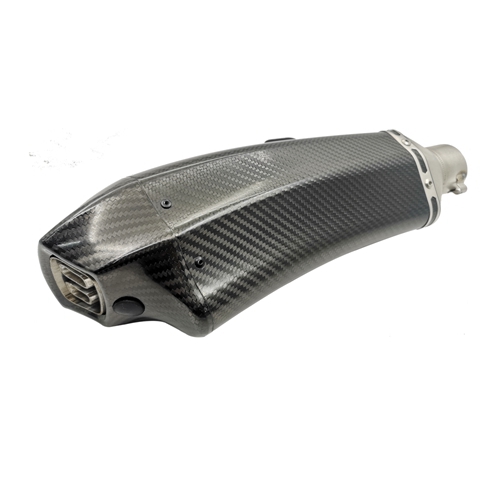
Every time the engine fires, high-temperature gases must leave the combustion chamber. If they cannot exit efficiently, the engine loses responsiveness, heat builds up, and operating stability suffers. The exhaust system provides a controlled route for those gases to exit safely while shaping key outcomes that riders and end users notice immediately.
The system is designed to accomplish several goals at the same time:
Move exhaust gases away from the engine and rider area
Manage acoustic output so sound remains controlled and consistent
Handle high temperatures and repeated heat cycling without deformation
Maintain stable sealing so leaks do not occur at joints and flanges
Package cleanly inside the motorcycle chassis without clearance conflicts
From a sourcing perspective, the exhaust system is also a fitment product. If geometry, bracket positioning, and joint structure are not consistent, installation difficulty rises and returns increase. This is why exhaust system definition should include both function and manufacturing repeatability.
A complete motorcycle exhaust system can include several parts, depending on the model and whether it is a slip-on or a full system. Even when the external appearance looks simple, there are usually multiple interfaces that determine how reliable the installation will be.
Common components include:
Header Pipes
Header pipes connect directly to the engine’s exhaust ports. They handle the highest temperatures and must match engine outlet spacing and flange geometry precisely. Small deviations can cause leaks or stress during tightening.
Collector Or Merge Section
On multi-cylinder bikes, exhaust streams may merge in a collector. The collector influences how pulses interact and how gas flow is stabilized before reaching the muffler section.
Mid-Pipe Or Link Pipe
This is the connecting pipe that routes gases from the header or collector to the muffler. On many aftermarket programs, the link pipe is the key fitment piece because it determines outlet angle, clearance, and the final muffler position.
Muffler Or Silencer
The muffler reduces noise and shapes sound tone. It contains internal structures such as baffles, perforated tubes, and packing material. For many catalogs, the muffler is also the main styling component.
Mounting Brackets And Hangers
Brackets connect the system to the frame. Their position and stiffness are critical. Poor bracket design leads to rattling, vibration fatigue, and tip misalignment.
Heat Shields And Protection Parts
Heat shields reduce burn risk and protect nearby components. They also influence appearance and perceived quality, especially on dual-exhaust models.
Gaskets, Clamps, Springs, And Joint Hardware
These parts determine sealing reliability and serviceability. A good exhaust system is designed so joints remain stable after repeated heat cycles and vibration.
For buyers planning a program, it helps to define which of these parts are included in the SKU. This affects packaging, pricing structure, and how easily the product can be installed by end users.
The exhaust system works under dynamic conditions. Temperature rises quickly after ignition, materials expand, vibration loads increase with RPM, and road impacts transmit stress into brackets and joints. A properly designed system must maintain seal integrity and alignment despite these variables.
Gas movement in the exhaust is pulse-based rather than steady flow. That means internal geometry and routing can influence how smoothly the engine responds. In sourcing terms, the practical goal is not to chase abstract claims but to ensure the exhaust is engineered to avoid common failures:
Joint leakage caused by poor slip fit or flange flatness
Misalignment that causes the muffler to contact the swingarm or fairings
Bracket fatigue cracking from stress concentration
Finish discoloration or surface corrosion that damages product perception
A well-built system balances functional control and manufacturability so the exhaust behaves consistently unit after unit.
When buyers refer to motorcycle exhaust, they often mean one of two product types. The difference is important because it changes fitment variables, customization depth, and SKU planning.
| Item | Slip-On Exhaust | Full System Exhaust |
|---|---|---|
| Scope | Muffler and sometimes link pipe | Headers, collector, mid-pipe, muffler |
| Fitment Risk | Lower because OEM headers remain | Higher because engine-side routing changes |
| Customization Depth | Strong on muffler design and sound tuning | Strong across all geometry and styling |
| Program Strategy | Broad coverage catalogs | Model-specific premium lines |
If your catalog goal is wide coverage and stable compatibility, slip-on programs often scale faster. If your goal is deep differentiation or flagship product positioning, full systems offer stronger design control.
RUIYUE supports both structures under our motorcycle exhaust range, allowing buyers to choose the right path based on product tier and fitment strategy.
Compatibility is the deciding factor for most procurement programs. Even a well-finished exhaust will fail commercially if it does not install smoothly. Fitment quality is not one single measurement. It is a set of interface controls that must remain stable across batches.
Key fitment determinants include:
Engine port interface geometry, including flange match and sealing behavior
Pipe routing clearance to swingarm travel, foot controls, and body panels
Hanger position accuracy relative to frame mounting points
Joint structure stability, including clamp zones and slip depths
Tip alignment, especially on dual systems where symmetry is visible
For multi-model programs, these details become the difference between a scalable catalog and a high-return product line.
RUIYUE approaches compatibility by aligning design development with controlled fixtures and inspection steps so that geometry remains consistent for wholesale replenishment.
Material selection impacts corrosion resistance, heat behavior, manufacturing repeatability, and final appearance. In most sourcing programs, buyers choose among stainless steel, coated steel, and premium materials depending on product tier. Finishes then define the market look and price positioning.
Rather than treating material as a marketing label, professional programs define material and finish together because surface treatment affects durability and appearance stability after heat cycling.
Common finish directions include brushed surfaces, polished surfaces, matte treatments, and coated surfaces depending on the intended positioning. For catalog consistency, finish repeatability across production batches is as important as the initial sample look.
RUIYUE supports material and finish planning as part of the broader product architecture so your selection matches both market expectations and manufacturing stability.
A motorcycle exhaust system is often purchased as part of a long-term supply plan. Buyers need customization without unpredictable results, and they need repeat orders to match the approved sample. That requires a supplier that can build both product and process.
RUIYUE supports motorcycle exhaust programs by offering customization options that align with procurement realities:
Adjustable program structure for slip-on or full system development
Model-specific fitment development for brackets, routing, and joint structure
Controlled production to maintain geometry and appearance across batches
Packaging planning to protect finishes during shipping and warehouse handling
For buyers working as a solution provider, modular planning can reduce SKU pressure. Shared muffler bodies combined with model-specific pipes and brackets can support high adaptability without sacrificing fitment. This approach helps programs scale while keeping inventory manageable.
A motorcycle exhaust system is a complete set of components that guides exhaust gases away from the engine while controlling heat, noise, sealing reliability, and fitment stability. It typically includes headers, collector or merge sections, mid or link pipes, mufflers, brackets, heat shields, and sealing hardware. In sourcing and product planning, the exhaust system should be defined by how reliably it fits the target models and how consistently it can be produced across repeat orders.
If you are building a new catalog, developing a customized line, or expanding fitment coverage, RUIYUE can support program planning and stable supply for motorcycle exhaust sourcing.
Send us your target motorcycle models, preferred exhaust type, finish expectations, and estimated volume. We will recommend a practical configuration, share a quotation, and support sampling so you can move to production with confidence.


 Mobile Phone:
 Phone:
 Contact Now