A motorcycle fuel tank is more than a container for gasoline. It is a structural component that affects vehicle balance, rider ergonomics, styling identity, and long-term reliability. For distributors, importers, and manufacturers sourcing tanks for multiple models, material choice is one of the first decisions that determines cost, corrosion behavior, paint compatibility, welding method, and the stability of repeated production.
Most Motorcycle Tanks on the market are made from a limited set of proven materials: steel, aluminum, and plastic polymers. Each option has clear advantages and trade-offs in durability, weight, production complexity, and surface finishing. Some projects also use composite structures, but for scalable supply programs, steel, aluminum, and polymer tanks remain the most common.
This article explains what motorcycle tanks are made of, how each material behaves in real-world use, and how RUIYUE supports customized and scalable motorcycle tank sourcing for different market requirements.
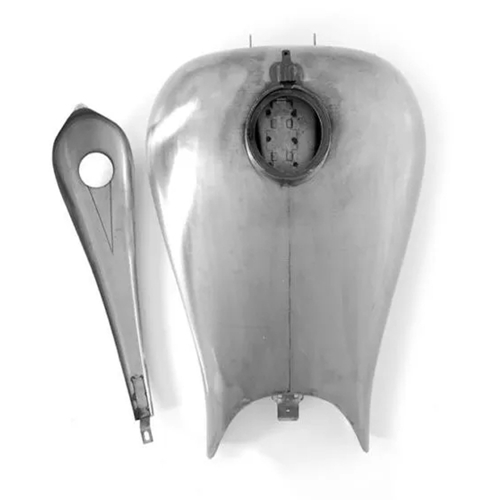
Steel has historically been the most widely used material for motorcycle fuel tanks because it offers strong impact resistance, stable manufacturability, and good surface finishing compatibility. Steel tanks can be stamped into complex shapes, welded reliably, and finished with paint systems that create a premium appearance, which is why many classic and mainstream motorcycles still use steel tanks.
From a sourcing standpoint, steel tanks are a practical choice when you need:
Stable supply for high-volume programs
Strong dent resistance under typical handling
Broad compatibility with paint and graphic processes
Predictable dimensional repeatability after tooling is established
Steel also works well for customization programs because mounting points, filler neck positioning, and bracket structures can be integrated into the design without requiring complex bonding processes. For buyers managing repeat orders, this production stability supports consistent fitment and reduces variance across batches.
However, corrosion control must be planned correctly. Steel tanks require proper surface protection and internal treatment strategies aligned with fuel exposure and storage conditions. For catalog programs, defining coating and quality checks is essential to avoid long-term complaints.
Aluminum tanks are often used in premium, performance-oriented, or weight-conscious projects. Compared with steel, aluminum can reduce overall mass and can support a distinctive product feel, which is valuable for high-end builds or models where handling and weight balance are part of the selling point.
In practical sourcing, aluminum tanks are selected when buyers want:
Lower weight for performance positioning
Corrosion resistance advantages in certain environments
A premium material identity for specialized product lines
Aluminum tank manufacturing requires controlled forming and welding processes to maintain shape accuracy and leak integrity. It can be more sensitive to welding parameters and finishing processes than steel, so supplier capability plays a larger role in ensuring consistent quality.
For buyers, aluminum programs should define:
Surface finishing method and appearance expectations
Welding and inspection standards for leak prevention
Packaging protection to avoid dents during transit and storage
RUIYUE supports aluminum tank projects by aligning design intent with manufacturable structures, helping buyers achieve the desired look while keeping production repeatable for stable delivery.
Polymer fuel tanks are increasingly common on many modern motorcycles, especially where manufacturers want design flexibility, corrosion resistance, and lighter weight compared with steel. Polymer tanks are typically created through molding processes, allowing complex internal shapes that can support packaging efficiency and vehicle integration.
From a sourcing perspective, polymer tanks can offer:
High corrosion resistance because the material does not rust
Lower weight in many configurations
Design freedom for integrated shapes and features
Potential manufacturing efficiency at scale with the right tooling
However, polymer fuel tanks must be engineered carefully for fuel compatibility, vapor management requirements, and dimensional stability across temperature changes. For procurement programs, the evaluation should include how the tank performs under real thermal cycling conditions, how it interfaces with mounting points, and how accessories such as pumps or caps are sealed.
If you are sourcing polymer tanks, it is important to confirm the project scope early because tooling investment and development approach can be different compared with metal tanks. When properly engineered, polymer tanks can deliver stable performance and strong long-term corrosion behavior.
Selecting tank material should be based on your market positioning, expected handling conditions, and how you plan to scale the program. Buyers typically evaluate material options across weight, durability, appearance, and production repeatability.
| Decision Factor | Steel Tank | Aluminum Tank | Polymer Tank |
|---|---|---|---|
| Weight | Higher | Lower | Often lower |
| Corrosion Risk | Needs protection | Lower risk | No rust |
| Appearance Finishing | Excellent paint compatibility | Premium feel, finish sensitive | Finish depends on molding and surface |
| Manufacturing Complexity | Stable for mass production | Higher process sensitivity | Tooling-dependent |
| Dent Resistance | Strong | Varies by thickness | Different impact behavior |
| Typical Program Fit | Mainstream, high-volume | Premium builds, performance lines | Modern integration and corrosion focus |
For wholesale-oriented programs, steel often offers the best balance of cost and repeatability. For high-end positioning, aluminum can support differentiation. For modern platform integration, polymers can provide design freedom and corrosion advantages.
RUIYUE helps buyers match these choices to real production feasibility so your selected material supports both market goals and stable supply.
Customization is not only about shape. For motorcycle tanks, customization often involves interfaces that determine fitment success and after-sales stability.
Common customization requirements include:
Mounting point geometry and bracket placement for specific frames
Filler neck position, cap type, and sealing structure
Fuel pump module interfaces or accessory integration
Capacity planning based on target model and market preference
Surface finish requirements such as paint, graphics, or special coatings
Material affects how easily these requirements can be implemented. Steel offers straightforward welding and bracket integration. Aluminum supports premium positioning but requires careful process control. Polymers allow integrated shapes but require tooling planning and sealing engineering.
For project-based procurement, the best approach is to define the customization priorities first, then confirm which material supports those requirements with the most stable production path.
For professional buyers, the key concern is not only material selection, but also whether the supplier can deliver consistent tanks across repeated orders. A tank must fit accurately, seal reliably, and maintain finish quality after shipping and storage.
RUIYUE supports motorcycle tank programs by focusing on:
Design alignment with manufacturable structures for stable repeat production
Custom interface development based on target models and mounting needs
Consistent inspection and leak-check discipline to reduce downstream risk
Finish planning and packaging protection to keep appearance consistent through logistics
For buyers working as an OEM/ODM partner, RUIYUE also supports deeper product development planning so that the tank design is not only customized, but also practical to scale into a long-term supply program.
Motorcycle tanks are most commonly made from steel, aluminum, or plastic polymers, with each material chosen for a different balance of durability, weight, corrosion behavior, and manufacturing strategy. Steel remains widely used for mainstream, high-volume programs because it is stable and paint-friendly. Aluminum is often selected for premium and weight-focused builds. Polymer tanks are increasingly common in modern designs due to corrosion resistance and design flexibility.
If you are sourcing tanks for multiple models or developing a customized tank program, RUIYUE can support material selection, fitment development, and stable batch delivery for motorcycle tank projects.
Share your target motorcycle models, preferred material direction, surface finish requirements, and expected volume. We will recommend a practical specification and provide a quotation and sampling plan to support your next procurement project.


 Mobile Phone:
 Phone:
 Contact Now