Rust inside a motorcycle petrol tank is a problem many riders do not notice until the bike starts running badly. At first, it may look like a fuel supply issue, a carburetor problem, or poor engine response. But in many cases, the real cause is much simpler. Moisture has stayed inside the tank for too long, the metal surface has started to oxidize, and rust particles are now moving through the fuel system.
For individual riders, this means cleaning and repair. For importers, distributors, and custom motorcycle parts buyers, it raises a bigger question. How do you reduce the chance of rust problems from the beginning, especially when you are sourcing tanks in volume for different markets? That is why rust removal is not only a maintenance topic. It is also a product quality topic.
Our classic-style motorcycle petrol tanks fit naturally into this discussion because fuel tank quality is not only about appearance. It also affects long-term durability, fuel storage reliability, and how well the tank performs after installation.
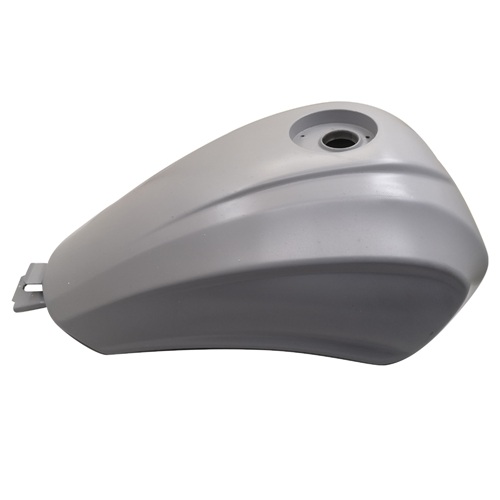
Rust usually starts when moisture gets trapped inside the tank. This can happen if the motorcycle sits unused for a long time, if the tank is stored with too little fuel, or if the environment is humid and temperature changes create condensation. Once water stays in contact with bare metal, corrosion begins.
The problem is often worse in older tanks or in bikes that are restored, modified, or kept for occasional riding. In those cases, the inside of the tank may not stay dry enough for long periods. Over time, the rust layer gets thicker, loose particles break away, and the fuel system starts to carry that contamination forward.
That is why rust is never just a cosmetic issue. Even if the outside of the tank still looks good, the inside may already be affecting fuel flow and engine performance.
A rusty petrol tank does not always show obvious signs from the outside. Many riders first notice the problem through engine behavior. The bike may hesitate, lose power, or feel less stable during acceleration. Fuel filters may clog faster than expected, and carburetor cleaning may need to be repeated more often.
In workshop and resale situations, this becomes even more important. If a buyer receives a tank that looks correct but creates fuel contamination after installation, the result is usually not one simple complaint. It turns into an after-sales issue involving the fuel line, filter, and sometimes the carburetor or injector system as well.
That is why serious buyers tend to care not only about tank style, but also about tank condition, internal cleanliness, and long-term reliability.
Removing rust from a motorcycle petrol tank usually starts with draining the tank fully and checking how serious the corrosion is. Light surface rust is easier to handle. Heavy rust, flaking scale, or damage around seams requires much more care.
In many cases, rust is removed by combining internal cleaning with a rust-dissolving treatment or mechanical agitation. The goal is to break down loose rust, remove contamination from the inner wall, and stop those particles from continuing through the fuel system. After the cleaning stage, the tank should be rinsed thoroughly and dried completely. If moisture remains inside, rust can begin again very quickly.
This is the part many people underestimate. Removing rust is only half the job. Keeping the tank dry and properly protected afterward is what determines whether the cleaning result lasts.
A tank that has been cleaned but not dried properly is still at risk. Moisture trapped near seams, corners, or low points can restart corrosion much faster than expected. This is especially true in environments where motorcycles are stored for long periods or used only seasonally.
That is why professional maintenance work usually pays close attention to drying after rinsing. A tank should not go back into service until the inside is fully dry and free from loose residue. If that step is rushed, the same problem may return even when the cleaning process looked successful at first.
For B2B buyers, this also explains why product quality at the supply stage matters so much. A better-made tank reduces future maintenance risk and gives distributors fewer problems after delivery.
Not every rusty petrol tank should be restored. If the inside is heavily corroded, if the metal has weakened, or if the tank has already been repaired multiple times, replacement is often the more practical option. Cleaning can remove rust, but it cannot always restore structural confidence.
This is where many wholesale and project buyers think differently from individual riders. Instead of spending time and labor trying to recover a badly damaged tank, they often prefer to source a better replacement tank that is easier to install, easier to sell, and more reliable in the long run.
Our classic-style motorcycle petrol tanks are positioned well for this kind of need because they are made for modified motorcycles and can support different market demands in classic and custom-style applications. That makes them easier to use not only in one-off replacement, but also in regular product supply.
When replacing a rusty tank, buyers are not only solving a fuel problem. They are also restoring the overall look of the motorcycle. This is especially important in modified and classic-style bikes, where the tank is one of the most visible parts of the whole build.
A replacement tank has to work in two ways. It needs to function properly for fuel storage and delivery, but it also needs to match the visual direction of the motorcycle. If the shape, line, or finish feels wrong, the bike immediately looks less complete.
That is why many buyers choose classic-style petrol tanks for custom and retro-inspired builds. They offer a more balanced combination of usability and appearance, which is important in markets where motorcycle parts are sold not only for repair, but also for styling and upgrade projects.
For wholesale customers, a petrol tank is never judged only by how it looks online. The real concerns are usually much more practical. Buyers want to know whether the product is suitable for the target motorcycle type, whether supply can stay consistent across repeat orders, and whether the supplier can support OEM or ODM cooperation when needed.
In bulk orders, consistency matters more than almost anything else. If the first sample looks good but later batches vary in finish, fit, or build quality, the sales risk rises quickly. This is especially true in aftermarket motorcycle parts, where customers expect the replacement part to match both function and style.
That is why many importers and distributors look for a supplier who can support not only production, but also stable long-term cooperation.
In motorcycle accessories and replacement parts, buyers often need more than standard stock. Different markets prefer different finishes, logos, and design directions. Some customers are building their own private label line. Others need a product that fits a certain modified-bike style popular in their region.
That is where OEM and ODM support become useful in real business, not just as sales language. A supplier that can work with custom requirements gives buyers more flexibility in product positioning and helps them build a stronger range for their own customers.
Our tank category supports this kind of cooperation, which is important for buyers who want more than one standard option in the market.
A good product is only part of a successful bulk program. Buyers also need dependable production and shipment support. If a supplier cannot maintain supply consistency or coordinate larger orders well, even a good tank design becomes difficult to sell.
For motorcycle parts importers, this matters because timing affects the whole business. Dealers need stock on time. Modification shops need stable replacement parts. Distribution channels depend on repeat supply, not just one successful first order.
That is why many professional buyers evaluate factory capability together with product quality. The stronger the supply system, the easier it becomes to build trust in the market.
Removing rust from a motorcycle petrol tank usually involves cleaning out corrosion, removing loose contamination, and making sure the inside is fully dried before the tank goes back into use. In light cases, that can restore normal fuel flow and prevent further trouble. In more serious cases, replacement is often the safer and more practical choice.
For importers, distributors, and motorcycle parts buyers, the bigger issue is not only how to remove rust. It is how to avoid repeated rust-related complaints by choosing a better tank solution from the start. Our classic-style motorcycle petrol tanks are made for modified motorcycle applications and bulk supply, making them a practical option for buyers who need both product style and long-term reliability.
If you are reviewing Motorcycle Tank options for your market or looking for a more dependable supplier for classic-style fuel tanks, feel free to contact us. We can help you discuss product direction, order requirements, and supply details so you can choose a solution that is easier to support and easier to sell.
Previous:
Next: How To Verify Fitment for Detachable Backrests in Bulk Orders?


 Mobile Phone:
 Phone:
 Contact Now