For motorcycle enthusiasts, the exhaust system is one of the most defining components—it influences not only performance but also sound, fuel efficiency, and even style. However, many riders often confuse the muffler with the exhaust, using the terms interchangeably. While they are part of the same system, each has a distinct role in how a motorcycle operates and sounds. In this article, we will clearly explain the difference between a muffler and an exhaust, how they work together, and why both are essential to the overall riding experience. We will also discuss how RUIYUE’s motorcycle exhaust systems are designed to optimize both performance and acoustic balance for riders worldwide.
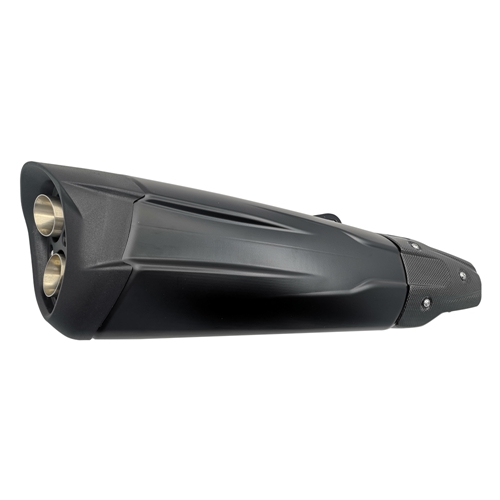
To understand the difference between the muffler and the exhaust, it’s important to first look at the entire exhaust system as a whole. The exhaust system is a collection of components designed to guide exhaust gases away from the engine safely while reducing harmful emissions and optimizing back pressure.
A standard motorcycle exhaust system includes the following main sections:
Exhaust manifold or header pipes: Collect gases directly from the engine’s cylinders.
Collector and mid-pipe: Merge gases from multiple cylinders and route them to the muffler.
Muffler (silencer): Reduces the noise created by gas explosions and controls the sound tone.
Tailpipe or outlet: Releases the treated exhaust gases into the atmosphere.
Each of these parts contributes to different aspects of performance. While the header and collector focus on gas flow and engine efficiency, the muffler primarily handles acoustic management—that is, controlling how loud and deep your motorcycle sounds.
RUIYUE exhaust systems are engineered as complete performance assemblies, meaning that every curve, diameter, and joint is designed to create smooth gas flow while maintaining the ideal sound balance. This synergy between exhaust and muffler design is what separates a well-crafted system from an average one.
The motorcycle exhaust refers to the entire pipe network that carries combustion gases from the engine to the atmosphere. Its main functions are to remove harmful gases, improve engine breathing, and maintain optimal back pressure for efficient power delivery.
Directing Gases Away from the Engine: The exhaust provides a controlled pathway for gases to exit the combustion chamber, preventing backflow that could reduce engine performance.
Controlling Back Pressure: Proper back pressure ensures smoother acceleration and stable torque output, especially at lower RPMs.
Reducing Emissions: Modern exhausts include catalytic converters that chemically treat gases like carbon monoxide and hydrocarbons, converting them into less harmful substances.
Enhancing Engine Sound: Although the muffler is responsible for silencing, the exhaust’s design and pipe length also influence the sound resonance and tone.
The exhaust pipes are typically made from materials like stainless steel, titanium, or Carbon Fiber, chosen for their heat resistance and strength. Advanced models like those produced by RUIYUE use CNC-formed stainless steel with seamless welds to improve durability and flow efficiency. The company’s systems are designed to balance lightweight construction with superior gas flow, providing riders with both performance and longevity.
In essence, the exhaust is the backbone of the system—a structural and functional pathway that governs how gases travel and how the engine breathes.
The muffler, sometimes referred to as the silencer, is one component within the larger exhaust system. Its primary role is to reduce noise created by the rapid release of high-pressure exhaust gases from the combustion chamber. When these gases leave the engine, they create sound waves that, without control, would be unbearably loud.
A muffler achieves sound reduction through a combination of sound reflection, absorption, and cancellation. Inside the muffler are a series of chambers, perforated tubes, and baffles that manipulate the sound waves to reduce their intensity. The design determines not just how quiet the motorcycle will be, but also the character of its exhaust note—from deep and throaty to smooth and refined.
| Component | Function | Effect on Sound |
|---|---|---|
| Perforated Tube | Channels exhaust gases while allowing sound waves to disperse | Softens high-frequency noise |
| Resonating Chamber | Creates sound wave interference | Deepens tone and reduces volume |
| Baffles and Reflectors | Redirect and absorb shock waves | Controls exhaust pitch |
| Packing Material (Fiberglass or Ceramic) | Absorbs vibration and heat | Muffles loud peaks |
RUIYUE mufflers are built using multi-chamber acoustic engineering combined with heat-resistant sound-absorbing materials. This ensures that riders experience a satisfying, powerful exhaust tone without violating noise regulations. Moreover, RUIYUE uses TIG welding and precision machining to ensure the muffler housing is both visually sleek and structurally durable.
In short, while the exhaust manages the flow of gases, the muffler refines how that flow sounds—transforming raw engine noise into a controlled and appealing exhaust note.
Although the muffler and exhaust are part of the same system, they serve distinct mechanical and acoustic purposes. Understanding their differences can help riders make informed choices when upgrading or customizing their motorcycles.
| Feature | Muffler | Exhaust |
|---|---|---|
| Definition | A component of the exhaust system that reduces noise | The entire system that carries exhaust gases from the engine |
| Primary Function | Sound suppression and tuning | Gas flow management and emission control |
| Location | Typically located at the end of the exhaust pipe | Runs from the engine head to the tail outlet |
| Construction | Includes chambers, baffles, perforated tubes | Includes headers, collectors, catalytic converter, and muffler |
| Impact on Performance | Affects exhaust tone and minor back pressure | Directly influences power output and engine efficiency |
| Material Options | Stainless steel, carbon fiber, titanium (for lightness) | Same materials, often with thicker walls for durability |
| Customization | Adjusts exhaust tone and volume | Alters power curve and torque characteristics |
In simple terms, the muffler is a part of the exhaust, but not the entire exhaust. Removing or replacing the muffler will primarily change the sound, while modifying the whole exhaust system affects both sound and performance.
RUIYUE integrates both aspects in their motorcycle exhaust systems—each design carefully tuned to ensure that airflow efficiency complements sound control. This means riders don’t have to choose between performance and a refined acoustic profile; they can have both in one system.
Although their roles differ, the muffler and exhaust operate in harmony as part of a single performance ecosystem. Together, they determine how effectively an engine breathes, how efficiently it burns fuel, and how pleasant it sounds to the rider.
1. Engine Efficiency and Gas Flow:
The exhaust pipes create a pathway that extracts gases using negative pressure created by the engine’s combustion cycles. A well-designed pipe diameter and length promote scavenging—pulling out burnt gases so fresh air-fuel mixture can enter quickly.
2. Sound Management:
Once gases reach the muffler, sound energy is absorbed or reflected through its internal design. Performance mufflers, such as those engineered by RUIYUE, are crafted to maintain gas velocity while subtly shaping the sound to achieve a deep, powerful tone without excessive noise.
3. Heat and Pressure Balance:
The combination of exhaust piping and muffler chambers helps distribute heat evenly, preventing localized overheating and maintaining long-term reliability. This also ensures that back pressure remains within the engine’s optimal range, supporting stable torque output.
4. Aesthetic and Functional Integration:
Modern exhaust systems are not just functional—they are also part of the motorcycle’s identity. Sleek curves, brushed metal finishes, and unique muffler shapes all contribute to the bike’s visual appeal. RUIYUE’s exhaust designs feature polished stainless steel and precision TIG welds, creating a balance between performance engineering and artistic craftsmanship.
In practice, replacing or upgrading either component should always consider the other. A mismatched muffler and exhaust setup can lead to poor performance, increased noise, or even engine strain. This is why manufacturers like RUIYUE design their systems as complete, harmonized assemblies that deliver consistent results across performance, sound, and durability.
The difference between a muffler and an exhaust on a motorcycle lies in their roles within the system. The exhaust is the entire mechanism that channels combustion gases away from the engine, enhancing performance and emission control, while the muffler is the specialized section that fine-tunes and reduces the sound those gases create.
A truly well-designed motorcycle system depends on the synergy between both components. RUIYUE, as a professional manufacturer of motorcycle exhaust systems, ensures that every product achieves this balance—combining efficient gas flow, refined acoustic design, and premium craftsmanship.
For riders seeking both power and personality, understanding this distinction helps in choosing the right exhaust setup that not only performs impressively but also sounds exactly as a motorcycle should: bold, balanced, and unmistakably alive.


 Mobile Phone:
 Phone:
 Contact Now