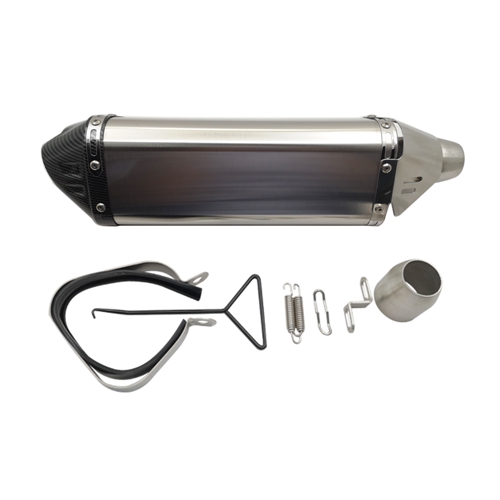
A Motorcycle Exhaust pipe muffler is one of the most visible and performance-sensitive products in aftermarket motorcycle parts. Buyers may compare sound, appearance, Carbon Fiber style, outlet design, and price before placing an order. But for importers and distributors, one hidden quality risk can create serious after-sales pressure: weld cracks.
Weld cracks may not appear during simple visual inspection. A quiet motorcycle muffler can look well polished and properly packed before shipment, but after installation, heat cycles, road vibration, and engine movement may expose weak welding areas. Once cracks appear, the muffler may leak air, make abnormal noise, discolor around the joint, or fail to meet customer expectations.
For bulk import orders, weld failure is not only a product defect. It can create returns, replacement costs, dealer complaints, negative reviews, and damage to long-term distribution relationships.
Motorcycle exhaust mufflers work under high temperature and vibration. During riding, the muffler repeatedly expands and contracts as temperature changes. Road vibration and engine movement also put stress on the welded joints, mounting brackets, inlet pipe, outlet area, and internal structure.
If the welding is shallow, uneven, contaminated, or poorly finished, the joint may become weak after repeated use. At first, the product may work normally. Later, the customer may notice air leakage, rattling sound, or visible cracking around the welded area.
For importers, this delayed failure is difficult because the product has already entered the market. Dealers may need to remove the muffler, inspect the crack, explain the issue to the customer, and request replacement support.
Weld cracks often start in high-stress areas. These areas should be checked carefully before shipment.
The inlet pipe connects the muffler to the motorcycle exhaust system. If the fitment is tight or installation angle is slightly off, stress can concentrate around the welded connection.
The bracket carries vibration and weight during riding. Weak bracket welding can create noise, movement, or cracks after repeated road use.
The outlet area faces heat, airflow, and vibration. Poor welding or poor finishing around the end cap can cause visible cracks or air leakage.
Some mufflers include internal structures for sound control. If internal welding is unstable, the customer may hear rattling noise after use.
Many buyers look for a quiet motorcycle muffler or a stable sound profile for their market. However, sound performance depends not only on the muffler design. Welding quality also affects air sealing and internal stability.
If a welded joint leaks, the muffler sound may become sharper or uneven. If an internal part becomes loose, the muffler may create rattling noise. If the end cap is not sealed properly, the sound may change after several rides.
For distributors, sound complaints can be difficult to handle because customers may describe the issue differently. Some may say the muffler is too loud. Others may say it sounds broken. In many cases, the root cause may be air leakage or internal vibration caused by weak welding.
Even a good muffler can face problems if the fitment is not correct. If the pipe diameter, clamp, spring, bracket, or adapter does not match the motorcycle properly, the installer may force the parts into position. This can put extra stress on the welded areas.
For this reason, importers should confirm pipe size, adapter requirements, clamp quality, spring kit completeness, and bracket position before placing bulk orders. If the muffler is used across different motorcycle models, fitment testing becomes even more important.
A small mismatch can create repeated complaints from dealers and repair shops.
For motorcycle exhaust wholesale supplier cooperation, inspection should include more than surface appearance. Buyers should check welding quality, pipe alignment, bracket strength, accessory completeness, and packaging protection.
Useful inspection points include:
Weld bead consistency
Cracks, pores, or uneven weld marks
Bracket welding strength
Inlet and outlet alignment
Pipe diameter accuracy
Clamp and spring kit completeness
Surface finish and scratches
Internal rattling noise
Carton protection
Model label accuracy
For bulk orders, random inspection should cover multiple cartons and production batches. This helps buyers identify whether the issue is isolated or repeated across the shipment.
Exhaust mufflers are often packed for long-distance shipping. If packaging does not protect brackets, tips, or pipe ends, impact during transport may stress welded areas before the product is even installed.
Buyers should confirm foam protection, carton strength, accessory packing, and whether the muffler can move inside the box. If the product has carbon fiber finish or polished metal surface, friction protection is also important.
A muffler that arrives with scratches, bracket deformation, or loose accessories may create complaints before installation begins.
Weld cracks can be expensive because they usually require replacement rather than simple repair. The importer may need to provide a new muffler, handle return shipping, offer compensation, or support the dealer with spare parts.
If the issue appears during peak sales season, the cost is even higher. Dealers may lose customer trust, and the distributor may have to inspect remaining inventory. If the product is sold through online channels, negative reviews can reduce future sales.
For long-term buyers, welding stability is part of brand protection. A lower unit price is not valuable if the return rate becomes too high.
Before confirming an order, buyers should discuss the target motorcycle model, expected sound level, pipe diameter, bracket position, finish requirement, and accessory kit. Samples should be tested for fitment, sound, and vibration conditions where possible.
Buyers should also confirm whether the supplier can keep welding quality consistent across repeat orders. Changing materials, brackets, or internal parts without notice can create performance differences between shipments.
For private label or distributor programs, keeping an approved sample as reference is useful. Future shipments can be compared against the approved standard before release.
Weld cracks in motorcycle exhaust mufflers can create costly returns for importers because the problem often appears after installation and real riding use. The issue may affect sound, sealing, fitment, appearance, and customer trust.
For motorcycle parts distributors, checking welding quality, fitment accuracy, accessory completeness, and packaging protection before shipment can reduce warranty claims and support long-term sales. A stable motorcycle exhaust pipe muffler should look good, install correctly, hold up under heat and vibration, and perform consistently in the market.
For ak motorcycle exhaust pipe muffler orders, quiet motorcycle muffler supply, or motorcycle exhaust wholesale purchasing, you can send us your required quantity, pipe diameter, finish style, sound requirement, bracket details, accessory kit requirements, packing method, and destination market.
Our team can help review fitment details, discuss welding and packaging requirements, confirm sample options, and prepare a quotation based on your real purchasing plan. If your customers are motorcycle parts importers, repair shops, online sellers, or aftermarket accessory dealers, you can also share your sales channel so we can help review product details before mass production.
For motorcycle exhaust muffler bulk pricing, sample review, private label orders, or export supply support, visit https://www.jiangmenruiyue.com and send us your inquiry details.


 Mobile Phone:
 Phone:
 Contact Now