In motorcycle specifications, CC stands for cubic centimeters. It describes the total swept volume of the engine cylinders as the pistons move through one complete stroke.
A 125 cc motorcycle has a smaller engine displacement than a 650 cc or 1,000 cc motorcycle. However, displacement is only one part of an engine’s design. Two motorcycles with the same CC rating may produce very different power, torque, sound, fuel consumption, and riding characteristics.
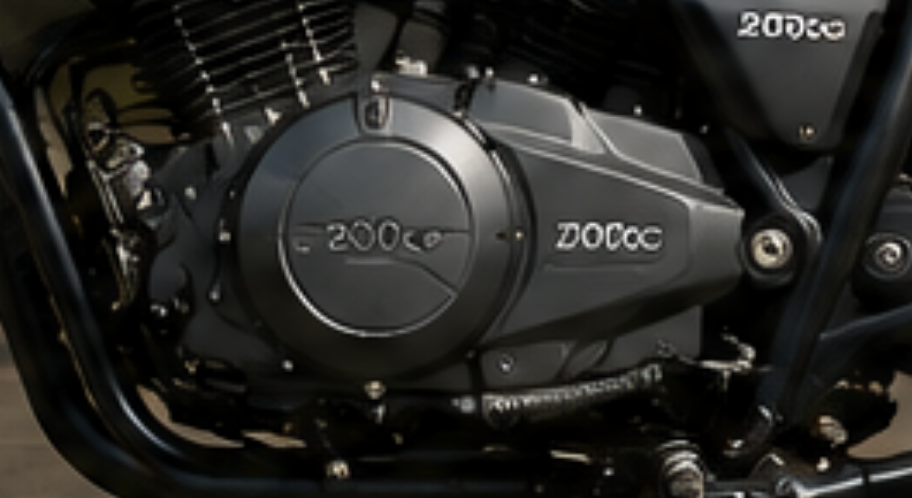
Engine displacement is based on three main measurements:
Cylinder bore
Piston stroke
Number of cylinders
The bore is the internal diameter of the cylinder. The stroke is the distance the piston moves between the top and bottom of the cylinder.
A single-cylinder engine uses the swept volume of one cylinder. A multi-cylinder engine combines the displacement of all cylinders.
CC provides a simple way to classify engines by size.
It helps buyers compare motorcycle models, understand licensing categories, and estimate the type of riding for which a motorcycle may be suitable.
However, CC does not directly state how fast the motorcycle will travel or how much horsepower it produces.
A larger engine generally has the potential to move more air and fuel during each operating cycle. This can support greater torque and power, but final output also depends on:
Compression ratio
Cylinder quantity
Valve design
Fuel injection
Ignition timing
Engine speed
Intake system
Exhaust design
Electronic tuning
A modern 600 cc sport engine may produce more peak power than a larger cruiser engine, while the cruiser may deliver stronger torque at lower engine speeds.
Smaller-displacement motorcycles are often selected for urban commuting, training, delivery work, and lower-speed riding.
Medium-displacement motorcycles can suit commuting, touring, and mixed road use. Large-displacement motorcycles are commonly used for highway travel, long-distance touring, cruisers, and high-performance applications.
These are general categories rather than fixed rules.
Engine displacement can influence fuel use, but it does not determine fuel economy by itself.
A larger engine may consume more fuel when producing greater power. Rider behavior, motorcycle weight, gearing, aerodynamics, traffic conditions, load, tire pressure, and maintenance can all change the actual result.
A small engine operated continuously at high speed may not always use less fuel than a larger engine working at a lighter load.
CC is useful when selecting exhaust components, but it is not enough to confirm fitment.
A Custom Motorcycle Exhaust Muffler must also match the motorcycle’s:
Header or link-pipe diameter
Mounting position
Bracket location
Exhaust routing
Engine configuration
Sensor arrangement
Ground clearance
Heat-control requirements
Local sound and emissions rules
A muffler advertised for a broad CC range may still require a compatible link pipe, reducer, mounting bracket, or model-specific connection.
The external size of a muffler does not reveal its complete internal structure.
Perforated tubes, chambers, packing material, outlet diameter, and removable silencers can influence sound and gas flow.
An unsuitable exhaust may create fitment problems, excessive noise, heat concentration, or changes in engine response.
After installation, fuel-injection or engine-management adjustment may be required on some motorcycles.
We manufacture motorcycle exhaust mufflers, header pipes, link pipes, stainless steel mid-pipes, carbon-fiber mufflers, heat shields, and related modified motorcycle components.
Our product range includes universal and model-oriented exhaust products in different materials, structures, dimensions, and finishes.
Our factory operates dedicated exhaust production lines and supports product development, sample confirmation, production inspection, and customized packaging for international buyers.
For a more accurate exhaust proposal, buyers should provide:
Motorcycle brand and model
Model year
Engine displacement
Header outlet diameter
Mounting-point dimensions
Required muffler length
Material and finish
Sound-control requirement
Target market
Estimated order quantity
Planning an exhaust range for distributors, motorcycle brands, modification shops, or aftermarket retailers?
Send us your motorcycle application, pipe dimensions, mounting drawing, material choice, surface finish, sound requirement, packaging, and purchasing volume. We will review the fitment and prepare a Custom Motorcycle Exhaust Muffler proposal.


 Mobile Phone:
 Phone:
 Contact Now